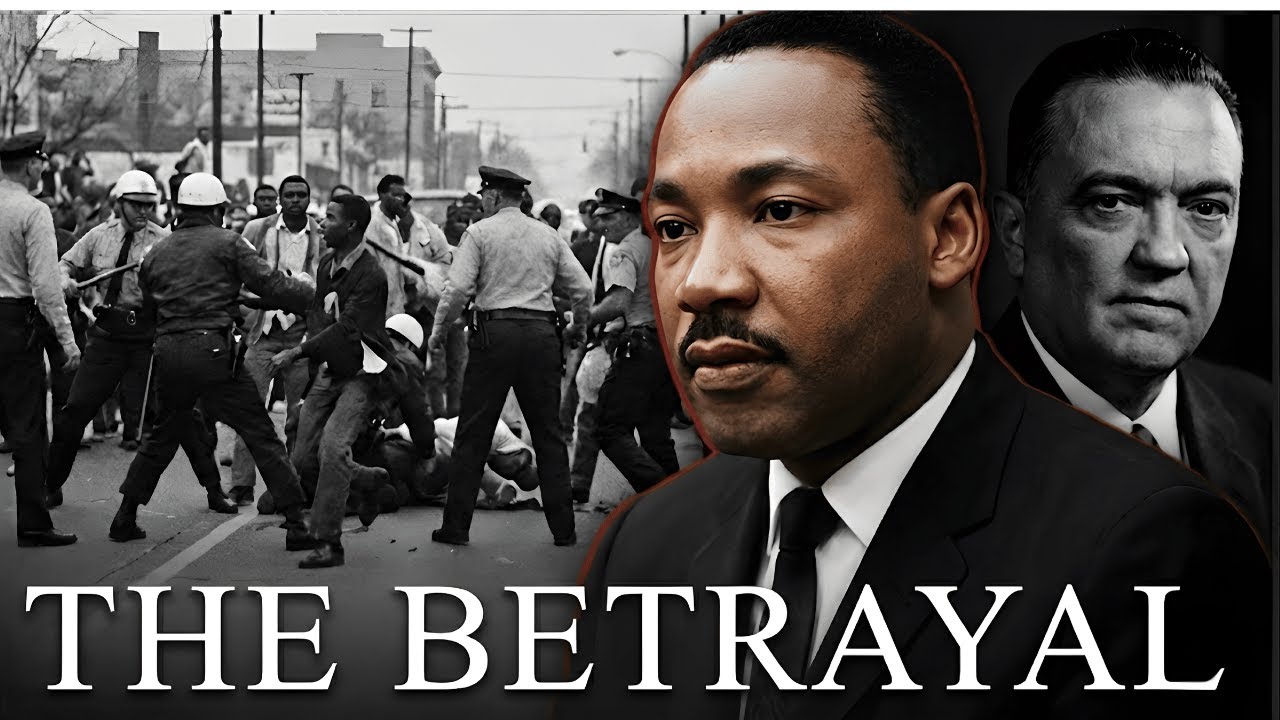
MLK's Radical Year: When 75% Of America Rejected Its Hero
By 1967, Martin Luther King Jr. had become a liability. Seventy-five percent of Americans disapproved of him. He had broken publicly with the Johnson administration over Vietnam War policy. He had begun articulating a critique of American capitalism that went far beyond civil rights rhetoric. He had moved from being a contained symbol of racial progress to being a genuine threat to the fundamental structures of American power.
On April 4, 1967—exactly one year before his assassination—King delivered a speech at Riverside Church in New York City that would define the final year of his life. The speech was titled "Beyond Vietnam: A Time to Break Silence." King spent an hour methodically documenting America's role in Southeast Asia. He called the United States "the greatest purveyor of violence in the world today." He connected American military violence abroad to systemic violence against Black communities at home. He articulated something the establishment had hoped he would never say: that American imperialism was inseparable from American racism, that the same power structure that oppressed Black Americans was destroying peasants in Vietnam.
The response was immediate and total. The New York Times editorial board published an editorial criticizing the speech as irresponsible and suggesting that King had damaged the civil rights cause. Life magazine ran a full editorial condemning King for conflating foreign policy with domestic racial justice. The Johnson administration, which had backed King during the 1965 Voting Rights Act, distanced itself publicly. The NAACP began publicly disagreeing with his Vietnam position. Major labor leaders who had marched with King in 1963 backed away from public association with him.
King understood what was happening. He had become more dangerous than ever because he had moved from being a voice for civil rights to being a voice for structural change. In his final year, King delivered sermons and speeches that articulated a comprehensive critique of American militarism, American capitalism, and American imperialism. He talked about guaranteed income as a response to poverty. He organized the Poor People's Campaign, designed to force the federal government to acknowledge that poverty itself was an act of violence.
The King that America celebrates today is the 1963 King—the dreamer at the Lincoln Memorial, the man who imagined a color-blind future and spoke of moral progress. That King is safe. That King can be quoted without disrupting anything. The 1967 King—the one who challenged American militarism, who demanded economic restructuring, who connected racism to capitalism—that King has been systematically erased from public memory. His final speeches are rarely quoted in schools. His Poor People's Campaign is rarely taught. His evolution from civil rights leader to revolutionary critic has been buried beneath the marble rhetoric of the "I Have a Dream" speech.
Yet those who feared King knew what he was becoming. The government was investigating him, the FBI was surveilling him, the political establishment was isolating him. One year after the Riverside speech, King was dead. The radical King—the 1967 King who scared the entire power structure—never got to finish his work. And so America has been allowed to remember him as safe.
The Surveillance State
The FBI’s interest was not coincidental. Under J. Edgar Hoover’s directorship, the Bureau maintained extensive surveillance programs targeting Black leaders, organizations, and cultural figures who challenged the racial status quo. COINTELPRO — the Counter Intelligence Program — was the formal structure, but the surveillance extended well beyond any single program. Field offices across the country maintained files, cultivated informants, and deployed agents to monitor, disrupt, and discredit individuals the Bureau deemed threatening to domestic order.
The methods were systematic: wiretaps, mail interception, infiltration of organizations, anonymous letters designed to destroy relationships and reputations, and coordination with local law enforcement to harass targets through arrests, tax audits, and public smear campaigns. The goal was not simply intelligence gathering — it was neutralization. The Bureau sought to prevent the rise of what internal memos described as a “Black messiah” who could unify and electrify the masses.
The Broader Struggle
This story did not unfold in isolation. It was part of a vast, interconnected struggle for equality that defined twentieth-century America. From the courtrooms to the streets, from the churches to the legislative chambers, Black Americans and their allies were challenging a system of racial oppression that had been embedded in law, custom, and daily life for centuries. Each individual story — each act of courage, each confrontation with power — was a thread in a larger tapestry of resistance.
What distinguished this era was the systematic nature of both the oppression and the resistance. The movement operated on multiple fronts simultaneously: legal challenges through organizations like the NAACP Legal Defense Fund, economic pressure through boycotts and selective buying campaigns, moral persuasion through nonviolent direct action, and cultural transformation through art, music, and literature that reframed the narrative of Black life in America.
Why This Matters Now
This history is not merely an account of past events. It is a living document that shapes the present. The institutions that enabled these abuses — the FBI, local police departments, the courts — continue to operate today. The patterns of surveillance, suppression, and selective justice that defined the treatment of Black Americans in the twentieth century did not end with the passage of civil rights legislation. They evolved, adapted, and persisted in forms that are sometimes more subtle but no less consequential.
Understanding this history is essential not as an exercise in guilt or recrimination, but as a foundation for honest engagement with the ongoing challenges of racial justice in America. The stories of individuals who faced overwhelming institutional power and refused to surrender — who insisted on their dignity, their rights, and their humanity in the face of systematic attempts to deny all three — remain relevant because the struggle they waged is not over.
Leave a Reply