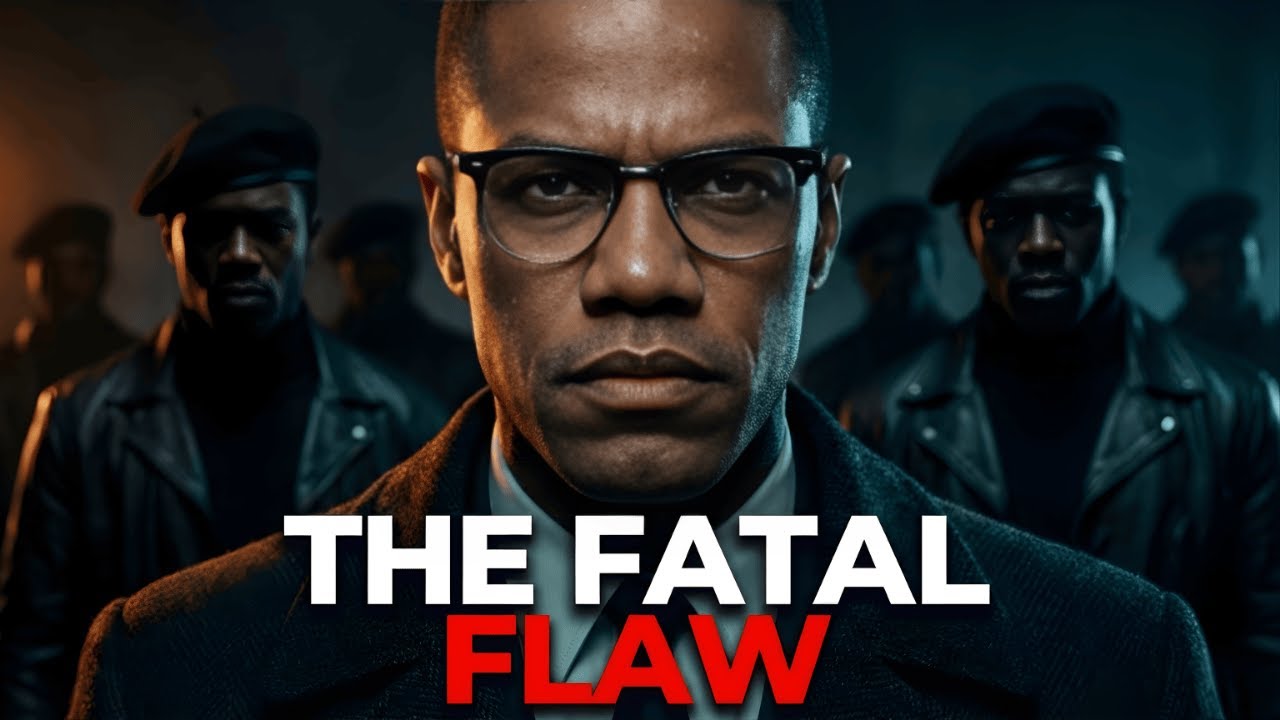
FBI Memo #100-399321: The Bureau Knew About Malcolm X\u2019s Assassination Before It Happened
On February 21, 1965, Malcolm X was shot fifteen times as he took the stage at the Audubon Ballroom in Washington Heights, Manhattan. Three men were convicted: Mujahid Abdul Halim (Talmadge Hayer), Muhammad Abdul Aziz, and Khalil Islam. Halim confessed. Aziz and Islam maintained their innocence for fifty-five years.
On November 18, 2021, a Manhattan judge vacated the convictions of Aziz and Islam. The reason: newly discovered evidence that the FBI and the NYPD had withheld exculpatory material for over half a century.
The declassified record tells a story of institutional complicity.
FBI File #100-399321 — Malcolm X's Bureau file — spans thousands of pages. The surveillance was comprehensive: phone taps, mail intercepts, informant reports, and physical surveillance teams. By February 1965, the Bureau had at least five informants within the Organization of Afro-American Unity (OAAU), Malcolm's post-Nation of Islam organization.
One of those informants, known as \u201cBMO,\u201d was inside the Audubon Ballroom the day of the assassination. His report to the Bureau, filed within hours, provided details about the shooting that matched no other witness account in specificity. The FBI had an operative in the room and did not alert Malcolm to the threat.
The NYPD also had undercover officers present. Detective Gene Roberts, a member of the Bureau of Special Services (BOSSI), had infiltrated Malcolm's inner circle. Roberts was in the audience when the shooting began. He cradled Malcolm's head and attempted mouth-to-mouth resuscitation. He was never called as a witness at trial.
The 2021 reinvestigation, led by Manhattan District Attorney Cyrus Vance Jr., uncovered a 1965 FBI memo from the Newark field office identifying the actual shooters — members of the Nation of Islam's Newark mosque. The memo named individuals who were never charged. It was not shared with the defense at any point during the original trial or the decades of appeals that followed.
Additional documents showed that the FBI had actively inflamed the conflict between Malcolm and the Nation of Islam as part of COINTELPRO. Bureau memos described a strategy of sending anonymous letters and fabricated communications designed to increase tensions and provoke violence between the two factions. A March 1964 memo from the New York field office proposed a specific operation to \u201cwiden the rift\u201d between Malcolm and Elijah Muhammad.
The FBI did not kill Malcolm X. But the Bureau's own files document three things: they knew a threat existed, they had operatives in position to intervene, and they pursued a deliberate strategy of escalating the conflict that led to his death. Then they withheld evidence that resulted in two innocent men spending a combined forty-two years in prison.
Muhammad Abdul Aziz was released in 1985 after twenty years. Khalil Islam was released in 1987 after twenty-two years. Islam died in 2009 without seeing his conviction overturned. Aziz lived to hear the judge say, \u201cThis court is satisfied that these convictions should be vacated.\u201d
The FBI files are partially declassified now. The informant reports, the NYPD undercover documentation, and the Newark memo are public record. The Bureau knew what was coming, watched it happen, and then helped convict the wrong men. The file number is 100-399321. It was classified for decades. The truth was in it the entire time.
The Surveillance State
The FBI’s interest was not coincidental. Under J. Edgar Hoover’s directorship, the Bureau maintained extensive surveillance programs targeting Black leaders, organizations, and cultural figures who challenged the racial status quo. COINTELPRO — the Counter Intelligence Program — was the formal structure, but the surveillance extended well beyond any single program. Field offices across the country maintained files, cultivated informants, and deployed agents to monitor, disrupt, and discredit individuals the Bureau deemed threatening to domestic order.
The methods were systematic: wiretaps, mail interception, infiltration of organizations, anonymous letters designed to destroy relationships and reputations, and coordination with local law enforcement to harass targets through arrests, tax audits, and public smear campaigns. The goal was not simply intelligence gathering — it was neutralization. The Bureau sought to prevent the rise of what internal memos described as a “Black messiah” who could unify and electrify the masses.
The Broader Struggle
This story did not unfold in isolation. It was part of a vast, interconnected struggle for equality that defined twentieth-century America. From the courtrooms to the streets, from the churches to the legislative chambers, Black Americans and their allies were challenging a system of racial oppression that had been embedded in law, custom, and daily life for centuries. Each individual story — each act of courage, each confrontation with power — was a thread in a larger tapestry of resistance.
What distinguished this era was the systematic nature of both the oppression and the resistance. The movement operated on multiple fronts simultaneously: legal challenges through organizations like the NAACP Legal Defense Fund, economic pressure through boycotts and selective buying campaigns, moral persuasion through nonviolent direct action, and cultural transformation through art, music, and literature that reframed the narrative of Black life in America.
Art as Resistance
Music was never just entertainment in this context — it was a weapon, a shield, and a declaration. Black artists who used their platform to address racial injustice understood that their art reached audiences that political speeches could not. A song could cross racial lines, enter homes through radio waves, and plant ideas in minds that might otherwise remain closed. The government understood this too, which is precisely why artists who spoke out became targets.
The relationship between Black music and political power has always been fraught. Record labels, concert promoters, and radio stations — overwhelmingly white-owned — controlled distribution and access. Artists who pushed too far politically risked losing airplay, bookings, and contracts. The choice between commercial success and authentic expression was rarely simple, and those who chose to speak truth through their art often paid a steep professional and personal price.
Justice Deferred
The legal dimensions of this case reveal how the American justice system has historically functioned as both a tool of liberation and a mechanism of oppression. Courts that were capable of landmark civil rights decisions were equally capable of producing outcomes that reinforced racial hierarchies. The same Constitution that guaranteed equal protection under the law was interpreted, for generations, to permit systematic racial discrimination.
What the legal record shows is that justice, when it came at all, came slowly and incompletely. Cases dragged on for years. Evidence was suppressed, witnesses were intimidated, and juries were selected from pools that excluded Black citizens. The system worked exactly as it was designed to work — not to deliver impartial justice, but to maintain the existing social order. When that order was finally challenged, the system resisted with every tool at its disposal.
Why This Matters Now
This history is not merely an account of past events. It is a living document that shapes the present. The institutions that enabled these abuses — the FBI, local police departments, the courts — continue to operate today. The patterns of surveillance, suppression, and selective justice that defined the treatment of Black Americans in the twentieth century did not end with the passage of civil rights legislation. They evolved, adapted, and persisted in forms that are sometimes more subtle but no less consequential.
Understanding this history is essential not as an exercise in guilt or recrimination, but as a foundation for honest engagement with the ongoing challenges of racial justice in America. The stories of individuals who faced overwhelming institutional power and refused to surrender — who insisted on their dignity, their rights, and their humanity in the face of systematic attempts to deny all three — remain relevant because the struggle they waged is not over.
Leave a Reply