How Jesse Jackson Changed What Was Possible in America
Jesse Jackson's Rainbow Coalition was not an electoral campaign—it was an experiment in permanent political restructuring. When Jackson announced his presidential candidacy in 1983, he was relatively unknown to national politics. Yet within twelve months, he had registered over one million new voters, predominantly Black, Latino, and working-class white Americans who had been systematically excluded from the electoral process. By the end of 1984, Jackson had won the South Carolina primary, finished third overall at the Democratic National Convention, and demonstrated that a grassroots political operation could challenge the party establishment.
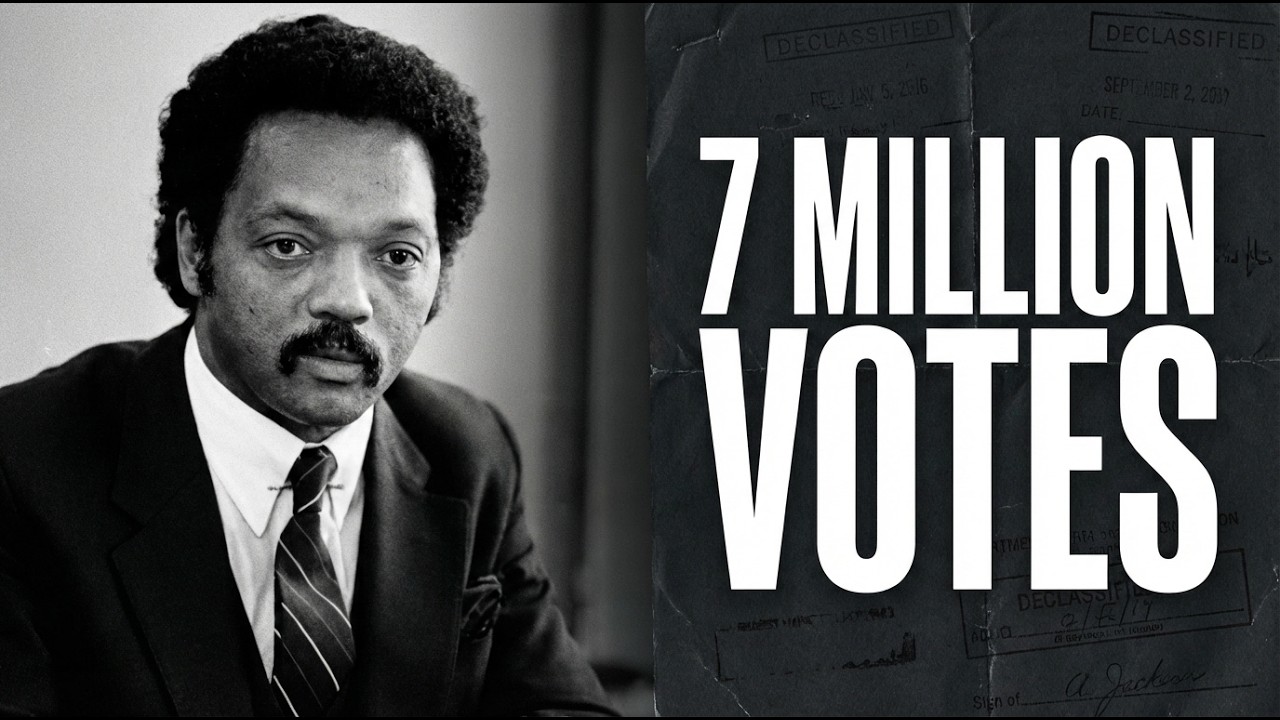
By 1988, Jackson had refined the operation into a formidable machine. He won eleven primaries and caucuses, including victories in Vermont, Alaska, Hawaii, and Virginia. He earned seven million votes—more than 29% of the total primary vote, second only to Michael Dukakis. Jackson's campaign had built infrastructure in every state, had trained grassroots organizers, had proven that a multiracial, multiclass coalition could compete for and win in the Democratic primary. The party establishment, which had expected Jackson to be a protest candidate receiving support from the Black community alone, discovered instead that he could win white voters in rural areas, Latino voters in the Southwest, working-class voters in the industrial Midwest.
The Rainbow Coalition's power lay not in Jackson himself but in what he had assembled: a political force that cut across racial, ethnic, geographic, and class lines. Black nationalist activists, Latino farmworkers, Appalachian coal miners, Native American leaders, progressive unionists, and feminist organizers had been unified into a single electoral vehicle. For the first time since the late 1960s, the Democratic Party was confronted with a coalition that couldn't be managed through separate and competing appeals. The party depended on keeping these groups isolated, competitive for limited resources, unable to recognize their common interests. Jackson's Rainbow Coalition threatened to make that invisible architecture visible.
The party's response was to systematically delegitimize Jackson and dismantle his coalition. The media reduced Jackson to a 'protest candidate'—language designed to suggest his campaign was symbolic rather than serious, that his millions of votes were less legitimate than those of establishment-backed candidates. The media obsessed over minor controversies while ignoring the substance of Jackson's platform: community control of local institutions, demands for economic restructuring, an end to American military interventions abroad.
After Jackson's strong 1988 finish, the Democratic National Committee implemented new rules designed to prevent any grassroots candidate from replicating his success. The party increased the costs of delegate operations, changed the primary calendar to frontload contests in states where Jackson had been weak, and altered the formula for translating votes into delegates. These were not accidental rule changes—they were a surgical dismantling of the organizational structures that had made Jackson's coalition possible.
Jesse Jackson remained a prominent figure in American politics for decades, but the Rainbow Coalition as a permanent political movement was over. It had been not defeated but dismantled. The multiracial, multiclass coalition that Jackson had assembled was deliberately broken apart. The Rainbow Coalition remains one of the most dangerous—and most successfully suppressed—political movements in modern American history.
The Surveillance State
The FBI’s interest was not coincidental. Under J. Edgar Hoover’s directorship, the Bureau maintained extensive surveillance programs targeting Black leaders, organizations, and cultural figures who challenged the racial status quo. COINTELPRO — the Counter Intelligence Program — was the formal structure, but the surveillance extended well beyond any single program. Field offices across the country maintained files, cultivated informants, and deployed agents to monitor, disrupt, and discredit individuals the Bureau deemed threatening to domestic order.
The methods were systematic: wiretaps, mail interception, infiltration of organizations, anonymous letters designed to destroy relationships and reputations, and coordination with local law enforcement to harass targets through arrests, tax audits, and public smear campaigns. The goal was not simply intelligence gathering — it was neutralization. The Bureau sought to prevent the rise of what internal memos described as a “Black messiah” who could unify and electrify the masses.
The Broader Struggle
This story did not unfold in isolation. It was part of a vast, interconnected struggle for equality that defined twentieth-century America. From the courtrooms to the streets, from the churches to the legislative chambers, Black Americans and their allies were challenging a system of racial oppression that had been embedded in law, custom, and daily life for centuries. Each individual story — each act of courage, each confrontation with power — was a thread in a larger tapestry of resistance.
What distinguished this era was the systematic nature of both the oppression and the resistance. The movement operated on multiple fronts simultaneously: legal challenges through organizations like the NAACP Legal Defense Fund, economic pressure through boycotts and selective buying campaigns, moral persuasion through nonviolent direct action, and cultural transformation through art, music, and literature that reframed the narrative of Black life in America.
Justice Deferred
The legal dimensions of this case reveal how the American justice system has historically functioned as both a tool of liberation and a mechanism of oppression. Courts that were capable of landmark civil rights decisions were equally capable of producing outcomes that reinforced racial hierarchies. The same Constitution that guaranteed equal protection under the law was interpreted, for generations, to permit systematic racial discrimination.
What the legal record shows is that justice, when it came at all, came slowly and incompletely. Cases dragged on for years. Evidence was suppressed, witnesses were intimidated, and juries were selected from pools that excluded Black citizens. The system worked exactly as it was designed to work — not to deliver impartial justice, but to maintain the existing social order. When that order was finally challenged, the system resisted with every tool at its disposal.
Why This Matters Now
This history is not merely an account of past events. It is a living document that shapes the present. The institutions that enabled these abuses — the FBI, local police departments, the courts — continue to operate today. The patterns of surveillance, suppression, and selective justice that defined the treatment of Black Americans in the twentieth century did not end with the passage of civil rights legislation. They evolved, adapted, and persisted in forms that are sometimes more subtle but no less consequential.
Understanding this history is essential not as an exercise in guilt or recrimination, but as a foundation for honest engagement with the ongoing challenges of racial justice in America. The stories of individuals who faced overwhelming institutional power and refused to surrender — who insisted on their dignity, their rights, and their humanity in the face of systematic attempts to deny all three — remain relevant because the struggle they waged is not over.
Leave a Reply