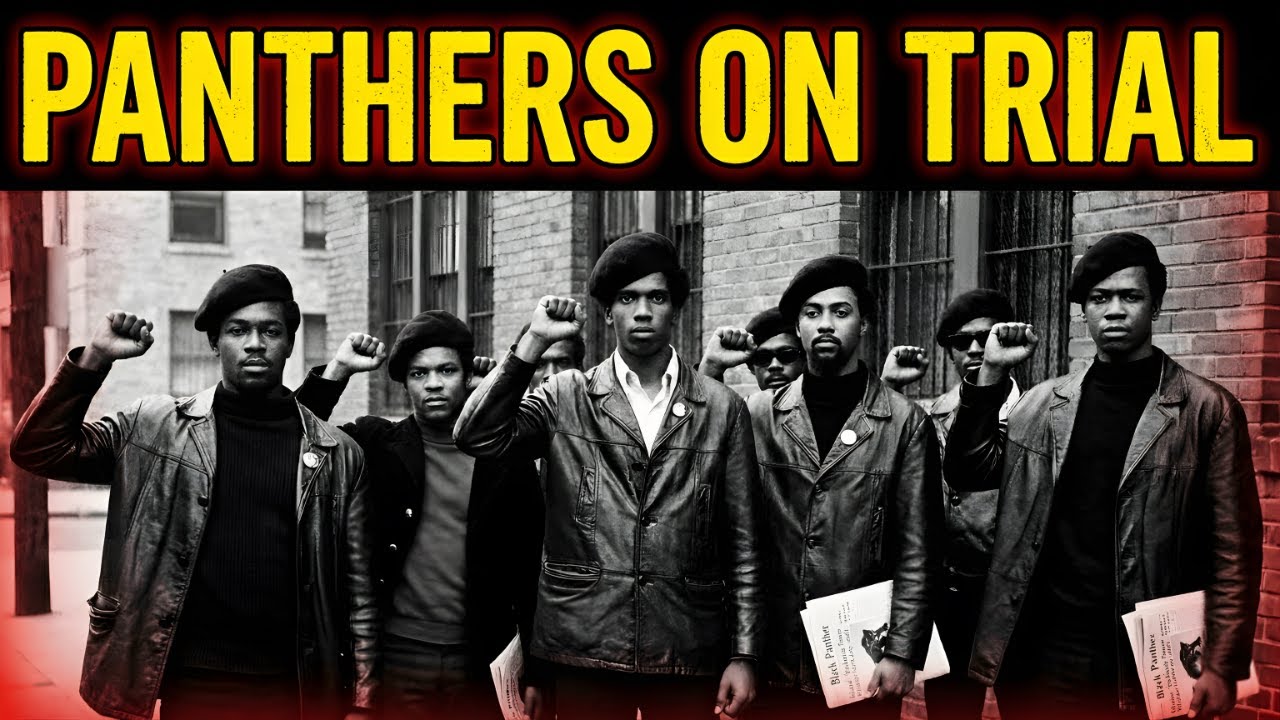
The Panther 21: 156 Charges, Zero Convictions, 45 Minutes of Deliberation
On April 2, 1969, before dawn, the New York City Police Department conducted coordinated raids across the city and arrested twenty-one members of the Black Panther Party. The indictment charged them with 156 felony counts: conspiracy to bomb police stations, department stores, railroad facilities, and the Bronx Botanical Garden. The prosecution described it as a plot to wage war on New York City.
The defendants were: Lumumba Shakur, Afeni Shakur, Dhoruba Bin Wahad (Richard Moore), Jamal Joseph, Sundiata Acoli, Ali Bey Hassan, Michael Tabor, Joan Bird, Robert Collier, Curtis Powell, Baba Odinga, Walter Johnson, Clark Squire, Lee Roper, Thomas Berry, Alex McKeiver, Shaba Om, Larry Mack, Kwando Kinshasa, Dennis Fox, and Richard Harris.
Bail was set at $100,000 per defendant — $2.1 million total, the highest collective bail in New York history. Most defendants could not make bail. They spent over two years incarcerated before trial.
The case was built on the testimony of three undercover operatives: NYPD detectives Ralph White, Gene Roberts, and Carlos Ashwood. These officers had infiltrated the New York Panthers at the direction of the Bureau of Special Services (BOSSI), the NYPD's intelligence unit, which operated in coordination with the FBI's COINTELPRO program.
The undercover officers had not simply observed. They had participated. They proposed targets, provided resources, and encouraged the very activities that formed the basis of the charges. The defense strategy centered on this fundamental contradiction: the government's own agents were the architects of the alleged conspiracy.
The trial lasted from September 1970 to May 1971 — eight months, making it the longest trial in New York state history at that time. The prosecution presented its case over several months. The defense cross-examined the undercover officers extensively, forcing them to acknowledge the extent of their involvement in planning the alleged operations.
The most damaging testimony for the prosecution came from its own witnesses. Under cross-examination, the undercover agents admitted that they had initiated discussions about bombing targets, that they had transported materials, and that they had encouraged reluctant defendants to participate in planning sessions. The line between infiltration and instigation had been obliterated.
Afeni Shakur, representing herself while eight months pregnant, delivered what observers described as one of the most effective cross-examinations of the entire trial, systematically dismantling the credibility of the government's informants.
On May 13, 1971, the jury returned its verdict: not guilty on all 156 counts for all twenty-one defendants. The deliberation lasted approximately forty-five minutes.
The acquittal was total. But the prosecution had achieved its operational objective. The defendants spent an average of two years in pre-trial detention. The legal defense cost hundreds of thousands of dollars, bankrupting the New York Panther chapter. The organizational disruption — twenty-one members removed simultaneously — was devastating. Key members were radicalized by the experience, leading some toward the underground Black Liberation Army.
The Panther 21 case is the clearest example of COINTELPRO's legal warfare strategy: use the criminal justice system itself as a weapon, regardless of whether convictions are obtained. The indictment was the punishment. The detention was the sentence. The trial was the destruction.
Forty-five minutes. That is how long it took a jury to see through 156 counts of fabricated charges, two years of pre-trial detention, and eight months of prosecution. The government's case was so transparent that the verdict took less time than a lunch break.
The files document all of it. The infiltration orders, the undercover reports, the bail recommendations, the coordination between BOSSI and the FBI. Every step was recorded. Every step was classified. And when the jury finally heard the evidence, they needed less than an hour to understand what had happened.
The Surveillance State
The FBI’s interest was not coincidental. Under J. Edgar Hoover’s directorship, the Bureau maintained extensive surveillance programs targeting Black leaders, organizations, and cultural figures who challenged the racial status quo. COINTELPRO — the Counter Intelligence Program — was the formal structure, but the surveillance extended well beyond any single program. Field offices across the country maintained files, cultivated informants, and deployed agents to monitor, disrupt, and discredit individuals the Bureau deemed threatening to domestic order.
The methods were systematic: wiretaps, mail interception, infiltration of organizations, anonymous letters designed to destroy relationships and reputations, and coordination with local law enforcement to harass targets through arrests, tax audits, and public smear campaigns. The goal was not simply intelligence gathering — it was neutralization. The Bureau sought to prevent the rise of what internal memos described as a “Black messiah” who could unify and electrify the masses.
Art as Resistance
Music was never just entertainment in this context — it was a weapon, a shield, and a declaration. Black artists who used their platform to address racial injustice understood that their art reached audiences that political speeches could not. A song could cross racial lines, enter homes through radio waves, and plant ideas in minds that might otherwise remain closed. The government understood this too, which is precisely why artists who spoke out became targets.
The relationship between Black music and political power has always been fraught. Record labels, concert promoters, and radio stations — overwhelmingly white-owned — controlled distribution and access. Artists who pushed too far politically risked losing airplay, bookings, and contracts. The choice between commercial success and authentic expression was rarely simple, and those who chose to speak truth through their art often paid a steep professional and personal price.
Justice Deferred
The legal dimensions of this case reveal how the American justice system has historically functioned as both a tool of liberation and a mechanism of oppression. Courts that were capable of landmark civil rights decisions were equally capable of producing outcomes that reinforced racial hierarchies. The same Constitution that guaranteed equal protection under the law was interpreted, for generations, to permit systematic racial discrimination.
What the legal record shows is that justice, when it came at all, came slowly and incompletely. Cases dragged on for years. Evidence was suppressed, witnesses were intimidated, and juries were selected from pools that excluded Black citizens. The system worked exactly as it was designed to work — not to deliver impartial justice, but to maintain the existing social order. When that order was finally challenged, the system resisted with every tool at its disposal.
Why This Matters Now
This history is not merely an account of past events. It is a living document that shapes the present. The institutions that enabled these abuses — the FBI, local police departments, the courts — continue to operate today. The patterns of surveillance, suppression, and selective justice that defined the treatment of Black Americans in the twentieth century did not end with the passage of civil rights legislation. They evolved, adapted, and persisted in forms that are sometimes more subtle but no less consequential.
Understanding this history is essential not as an exercise in guilt or recrimination, but as a foundation for honest engagement with the ongoing challenges of racial justice in America. The stories of individuals who faced overwhelming institutional power and refused to surrender — who insisted on their dignity, their rights, and their humanity in the face of systematic attempts to deny all three — remain relevant because the struggle they waged is not over.
Leave a Reply