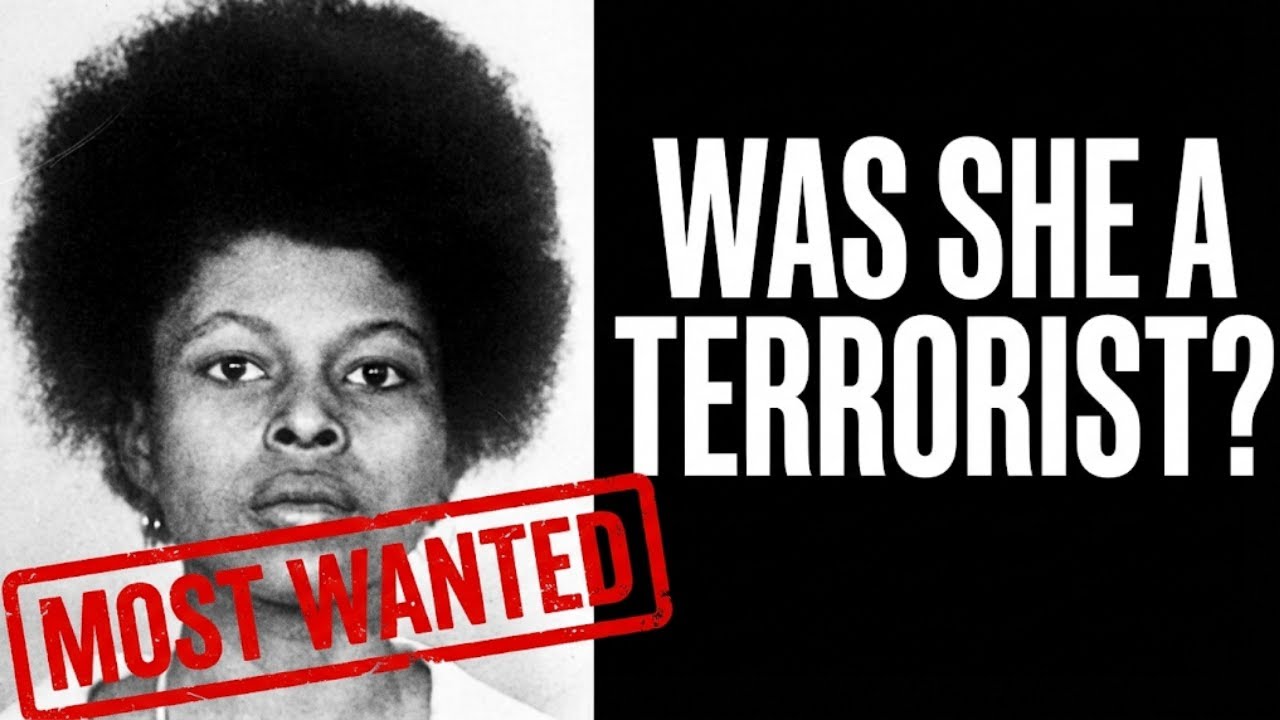
The FBI Made Assata Shakur the First Woman on Their Most Wanted Terrorists List
In May 2013, the FBI placed Assata Shakur on their Most Wanted Terrorists list — the first woman ever designated. The bounty: two million dollars. The charge: the 1973 killing of New Jersey State Trooper Werner Foerster during a traffic stop on the New Jersey Turnpike.
What the FBI press release did not mention: the Bureau had been building a case against Shakur since 1971, two years before the turnpike incident. COINTELPRO documents reveal she was identified as a target for neutralization as part of the Black Liberation Army disruption program. She was not investigated for a crime and then surveilled. She was surveilled first, and then crimes were attributed to her.
Between 1971 and 1973, Assata Shakur was charged with six separate crimes in New York and New Jersey: two bank robberies, the kidnapping of a drug dealer, attempted murder of two police officers, and two counts related to the turnpike shooting. She was acquitted of every charge except the turnpike case. Three were dismissed before trial. Three went to jury verdict — not guilty on all counts.
The acquittals tell a story the conviction obscures.
In the bank robbery cases, the prosecution's own witnesses could not identify Shakur. In the kidnapping case, the alleged victim recanted. In the attempted murder charges, forensic evidence contradicted the prosecution's timeline. Each case was built on informant testimony from individuals already cooperating with the Bureau under COINTELPRO protocols.
The turnpike case was different — not because the evidence was stronger, but because the venue was different. Shakur was tried in Morris County, New Jersey, with an all-white jury drawn from a community with a population that was less than four percent Black. Her co-defendant, Sundiata Acoli, was tried separately.
Medical evidence presented at trial showed that Shakur had been shot with her hands raised. The bullet wound to her clavicle entered from front to back, consistent with arms elevated. A second bullet struck her in the back. Neurological testimony indicated that the median nerve damage from the first wound would have made it physically impossible for her to fire a weapon. No gunpowder residue was found on her hands.
She was convicted on March 25, 1977, and sentenced to life plus thirty-three years.
On November 2, 1979, Shakur escaped from the Clinton Correctional Facility for Women in New Jersey. She surfaced in Cuba in 1984, where Fidel Castro granted her political asylum.
The FBI's decision to place her on the terrorist list in 2013 — forty years after the turnpike incident — was not motivated by new evidence. No new charges were filed. The designation coincided with the normalization of diplomatic relations between the United States and Cuba. Multiple analysts noted that the terrorist designation was a negotiating tool — leverage to pressure Cuba into extraditing Shakur as a condition of diplomatic engagement.
The COINTELPRO files on Shakur remain partially redacted. What has been released shows a pattern: the Bureau identified her as a symbolic figure, built multiple cases designed to ensure at least one conviction, and when acquittals mounted, escalated the charges.
Assata Shakur lived in Cuba until her death in September 2025. The FBI never removed her from the list. The two-million-dollar bounty was never claimed. And the six cases — five acquittals and one conviction — remain the clearest documentation of how COINTELPRO used the legal system as a weapon of political persecution.
The Surveillance State
The FBI’s interest was not coincidental. Under J. Edgar Hoover’s directorship, the Bureau maintained extensive surveillance programs targeting Black leaders, organizations, and cultural figures who challenged the racial status quo. COINTELPRO — the Counter Intelligence Program — was the formal structure, but the surveillance extended well beyond any single program. Field offices across the country maintained files, cultivated informants, and deployed agents to monitor, disrupt, and discredit individuals the Bureau deemed threatening to domestic order.
The methods were systematic: wiretaps, mail interception, infiltration of organizations, anonymous letters designed to destroy relationships and reputations, and coordination with local law enforcement to harass targets through arrests, tax audits, and public smear campaigns. The goal was not simply intelligence gathering — it was neutralization. The Bureau sought to prevent the rise of what internal memos described as a “Black messiah” who could unify and electrify the masses.
The Broader Struggle
This story did not unfold in isolation. It was part of a vast, interconnected struggle for equality that defined twentieth-century America. From the courtrooms to the streets, from the churches to the legislative chambers, Black Americans and their allies were challenging a system of racial oppression that had been embedded in law, custom, and daily life for centuries. Each individual story — each act of courage, each confrontation with power — was a thread in a larger tapestry of resistance.
What distinguished this era was the systematic nature of both the oppression and the resistance. The movement operated on multiple fronts simultaneously: legal challenges through organizations like the NAACP Legal Defense Fund, economic pressure through boycotts and selective buying campaigns, moral persuasion through nonviolent direct action, and cultural transformation through art, music, and literature that reframed the narrative of Black life in America.
Justice Deferred
The legal dimensions of this case reveal how the American justice system has historically functioned as both a tool of liberation and a mechanism of oppression. Courts that were capable of landmark civil rights decisions were equally capable of producing outcomes that reinforced racial hierarchies. The same Constitution that guaranteed equal protection under the law was interpreted, for generations, to permit systematic racial discrimination.
What the legal record shows is that justice, when it came at all, came slowly and incompletely. Cases dragged on for years. Evidence was suppressed, witnesses were intimidated, and juries were selected from pools that excluded Black citizens. The system worked exactly as it was designed to work — not to deliver impartial justice, but to maintain the existing social order. When that order was finally challenged, the system resisted with every tool at its disposal.
Why This Matters Now
This history is not merely an account of past events. It is a living document that shapes the present. The institutions that enabled these abuses — the FBI, local police departments, the courts — continue to operate today. The patterns of surveillance, suppression, and selective justice that defined the treatment of Black Americans in the twentieth century did not end with the passage of civil rights legislation. They evolved, adapted, and persisted in forms that are sometimes more subtle but no less consequential.
Understanding this history is essential not as an exercise in guilt or recrimination, but as a foundation for honest engagement with the ongoing challenges of racial justice in America. The stories of individuals who faced overwhelming institutional power and refused to surrender — who insisted on their dignity, their rights, and their humanity in the face of systematic attempts to deny all three — remain relevant because the struggle they waged is not over.
Leave a Reply