Untold Story of The Tulsa Massacre: $27M Stolen From Black Tulsa
On May 31 and June 1, 1921, a white mob destroyed thirty-five blocks of Greenwood, Tulsa—the most prosperous Black business district in America, known as 'Black Wall Street.' An estimated three hundred people were murdered. Over ten thousand Black residents were left homeless. The property damage in today's dollars exceeded twenty-seven million. The destruction was total. The erasure was deliberate.
But the massacre did not end when the fires went out. In the aftermath, Black property owners filed insurance claims for their destroyed homes and businesses. They had paid premiums. Their policies were valid. The losses were documented. Insurance companies across the country received these claims. And insurance companies across the country denied them. Every single claim was rejected.
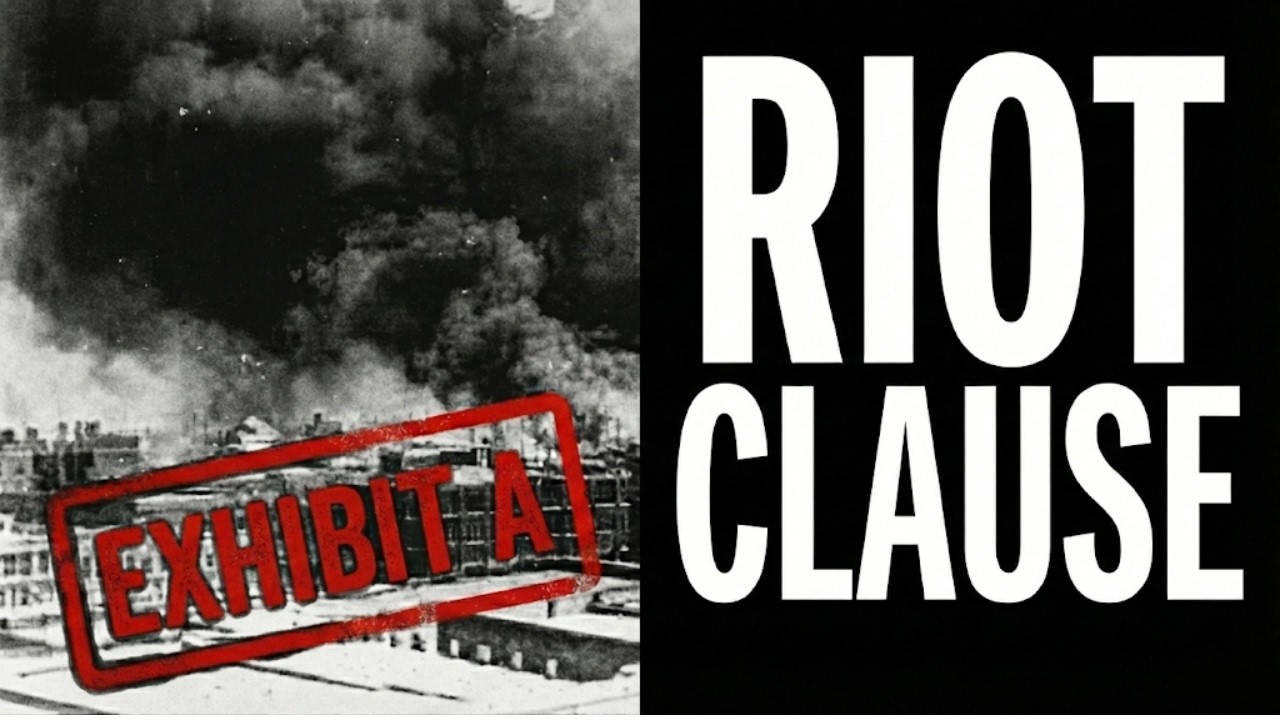
The mechanism of denial was specific and calculated: insurance companies classified the Tulsa massacre as a 'riot,' and their standard policies excluded coverage for damage caused by riots. This was not an accident of language. This was deliberate legal warfare. The classification transformed a coordinated, premeditated attack into a spontaneous civil disturbance—and in doing so, transformed responsibility. If it was a riot, then it was the fault of the community, not the attackers. If it was a riot, then insurance companies had no obligation to pay.
What happened in Tulsa was not a riot. The National Guard was deployed by the state government. Planes dropped incendiary devices from the air. White mobs moved systematically through the district. The Tulsa Tribune published inflammatory headlines that day, inciting violence. This was coordination. This was state action. Yet by calling it a riot, insurance companies ensured that Black families would bear the full financial cost of their own destruction. They had lost their homes, their businesses, their lives. Now they would lose their insurance claims as well.
The losses were never recovered. The precedent was set: Black communities destroyed by white violence would receive no compensation from insurance companies. Greenwood was rebuilt, slowly, by Black wealth reinvested in Black community. But the twenty-seven million dollars in stolen insurance claims remained stolen. The massacre was not only a physical destruction. It was an economic annihilation, systematized through the legal fiction of classifying mass murder as disorder.
The Surveillance State
The FBI’s interest was not coincidental. Under J. Edgar Hoover’s directorship, the Bureau maintained extensive surveillance programs targeting Black leaders, organizations, and cultural figures who challenged the racial status quo. COINTELPRO — the Counter Intelligence Program — was the formal structure, but the surveillance extended well beyond any single program. Field offices across the country maintained files, cultivated informants, and deployed agents to monitor, disrupt, and discredit individuals the Bureau deemed threatening to domestic order.
The methods were systematic: wiretaps, mail interception, infiltration of organizations, anonymous letters designed to destroy relationships and reputations, and coordination with local law enforcement to harass targets through arrests, tax audits, and public smear campaigns. The goal was not simply intelligence gathering — it was neutralization. The Bureau sought to prevent the rise of what internal memos described as a “Black messiah” who could unify and electrify the masses.
Why This Matters Now
This history is not merely an account of past events. It is a living document that shapes the present. The institutions that enabled these abuses — the FBI, local police departments, the courts — continue to operate today. The patterns of surveillance, suppression, and selective justice that defined the treatment of Black Americans in the twentieth century did not end with the passage of civil rights legislation. They evolved, adapted, and persisted in forms that are sometimes more subtle but no less consequential.
Understanding this history is essential not as an exercise in guilt or recrimination, but as a foundation for honest engagement with the ongoing challenges of racial justice in America. The stories of individuals who faced overwhelming institutional power and refused to surrender — who insisted on their dignity, their rights, and their humanity in the face of systematic attempts to deny all three — remain relevant because the struggle they waged is not over.
The Insurance Denial
After the massacre, Black residents of Greenwood filed insurance claims totaling an estimated $27 million in 1921 dollars — a sum that would exceed $400 million today. Every single claim was denied. Insurance companies cited a riot exclusion clause, arguing that the destruction was caused by civil unrest rather than an insurable event. This legal maneuver effectively transferred the entire financial burden of the massacre onto its victims.
The insurance denial was not merely a financial decision — it was a mechanism of permanent dispossession. Without insurance payouts, property owners could not rebuild. Without rebuilding, property values collapsed. Without property values, accumulated wealth — the single most important factor in economic mobility — was destroyed. The Greenwood district did eventually rebuild, through extraordinary community effort, but it never fully recovered the economic dynamism it had achieved before 1921.
The broader pattern is unmistakable. Throughout American history, moments of Black economic success have been met with violent destruction followed by institutional refusal to provide remedy. Greenwood was not unique — similar attacks on prosperous Black communities occurred in Rosewood, Florida, in 1923, in Wilmington, North Carolina, in 1898, and in dozens of other locations where Black prosperity was perceived as a threat to white supremacy. The insurance industry’s refusal to honor legitimate claims was simply the financial expression of the same racial logic that motivated the violence itself.
Leave a Reply