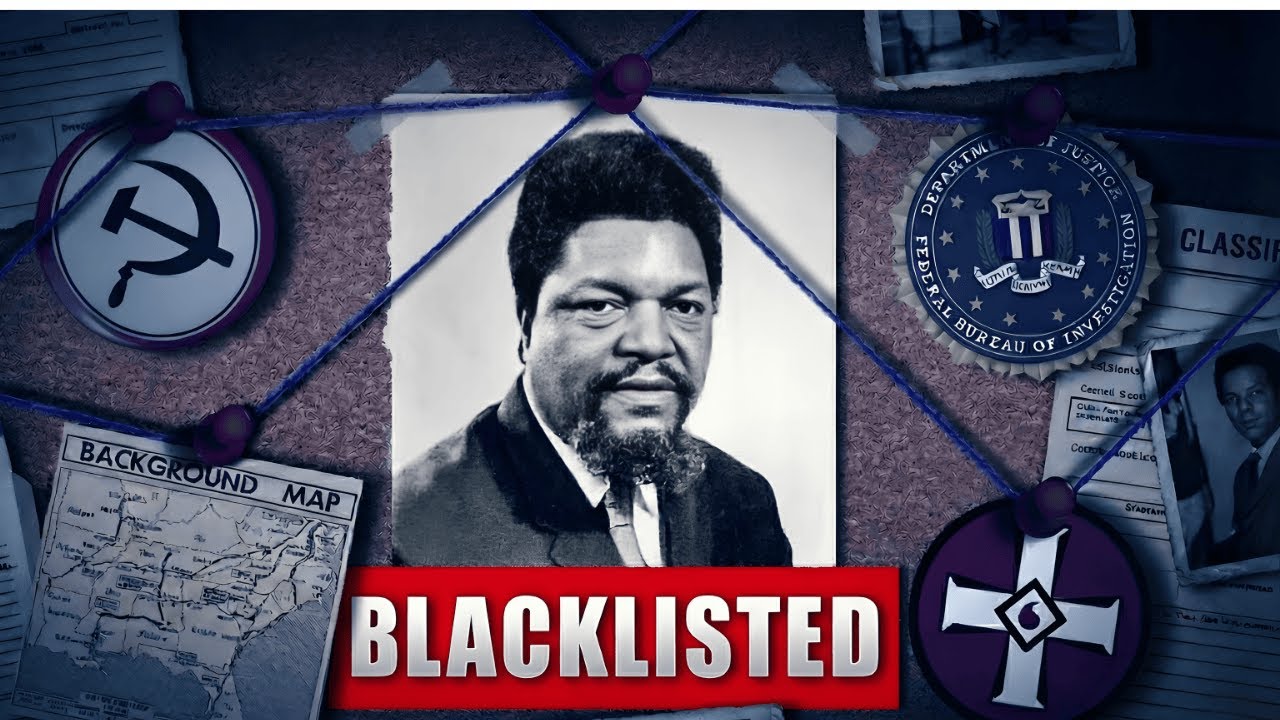
Punished for Defending His Family
Ossian Sweet wanted to buy a house. For this desire, he faced an armed mob. When he defended his family from that mob, the state charged him with murder.
Sweet was a Black physician practicing in Detroit in the 1920s—a period of significant Black migration to Northern industrial cities. Detroit's Black population had grown dramatically, concentrated in specific neighborhoods while white residents worked systematically to prevent Black families from moving beyond these boundaries. Sweet, having achieved professional and economic success, decided to purchase a home in a better neighborhood. On September 8, 1925, he and his family moved into a house on Garland Avenue—a white neighborhood where no Black families lived.
The response was immediate. Word spread through the white community that a Black family had moved in. By September 9, a mob had gathered outside Sweet's home. The mob grew throughout the day—by evening, several hundred white residents surrounded the house, throwing rocks and shouting threats. Sweet, his wife Gladys, his siblings, and friends who had come to help them settle in remained inside. Then the mob began to rush the house. Gunfire erupted. When it stopped, one white man was dead—a bystander named Leon Breiner—and another was wounded.
The legal response was swift and asymmetrical. Sweet and ten others inside the house were arrested and charged with murder. Leon Breiner's death was attributed to them. The hundreds of people who had surrounded the house, who had threatened violence, who had created the circumstances that led to gunfire—none of them were charged with anything. The mob had no criminal liability. The Black people defending themselves and their home did.
The case became a national flashpoint. The NAACP recognized the fundamental injustice at stake and recruited Clarence Darrow—the legendary defense attorney, fresh from the Scopes Trial—to lead Sweet's defense. Darrow's strategy was to establish that Sweet had the right to defend his home, his family, and his property. He presented evidence of the mob, the threats, the rocks, the violence. He established that Sweet was justified in believing his life and his family's lives were in danger. The jury could not agree on guilt. A mistrial was declared.
In subsequent trials, some charges were dismissed and some defendants were acquitted. Ossian Sweet's brother Henry was tried separately and acquitted on the grounds of self-defense. But the broader conviction that mattered—the conviction about what Black people could and could not do—had already been secured. The message was clear: Black families who attempted to move into white neighborhoods would face violence. That violence would not be punished. If they defended themselves against that violence, they would be prosecuted. The choice presented to Black families was simple: stay in your designated neighborhood, or face both a mob and the criminal justice system.
Ossian Sweet was eventually released, and the remaining charges were dropped. Darrow's brilliant defense had won acquittals, but it could not overcome the fundamental rule that segregation would be maintained through violence, and that Black self-defense would be criminalized. The Sweet case became a symbol of legal injustice, but the injustice it symbolized—that Black Americans had no right to choose where to live—remained the law of the land.
The Broader Struggle
This story did not unfold in isolation. It was part of a vast, interconnected struggle for equality that defined twentieth-century America. From the courtrooms to the streets, from the churches to the legislative chambers, Black Americans and their allies were challenging a system of racial oppression that had been embedded in law, custom, and daily life for centuries. Each individual story — each act of courage, each confrontation with power — was a thread in a larger tapestry of resistance.
What distinguished this era was the systematic nature of both the oppression and the resistance. The movement operated on multiple fronts simultaneously: legal challenges through organizations like the NAACP Legal Defense Fund, economic pressure through boycotts and selective buying campaigns, moral persuasion through nonviolent direct action, and cultural transformation through art, music, and literature that reframed the narrative of Black life in America.
Art as Resistance
Music was never just entertainment in this context — it was a weapon, a shield, and a declaration. Black artists who used their platform to address racial injustice understood that their art reached audiences that political speeches could not. A song could cross racial lines, enter homes through radio waves, and plant ideas in minds that might otherwise remain closed. The government understood this too, which is precisely why artists who spoke out became targets.
The relationship between Black music and political power has always been fraught. Record labels, concert promoters, and radio stations — overwhelmingly white-owned — controlled distribution and access. Artists who pushed too far politically risked losing airplay, bookings, and contracts. The choice between commercial success and authentic expression was rarely simple, and those who chose to speak truth through their art often paid a steep professional and personal price.
Justice Deferred
The legal dimensions of this case reveal how the American justice system has historically functioned as both a tool of liberation and a mechanism of oppression. Courts that were capable of landmark civil rights decisions were equally capable of producing outcomes that reinforced racial hierarchies. The same Constitution that guaranteed equal protection under the law was interpreted, for generations, to permit systematic racial discrimination.
What the legal record shows is that justice, when it came at all, came slowly and incompletely. Cases dragged on for years. Evidence was suppressed, witnesses were intimidated, and juries were selected from pools that excluded Black citizens. The system worked exactly as it was designed to work — not to deliver impartial justice, but to maintain the existing social order. When that order was finally challenged, the system resisted with every tool at its disposal.
The Price of Resistance
The violence that punctuated the struggle for Black equality was not random. It was strategic, designed to terrorize communities into submission and to send a message to anyone who might consider challenging the racial order. Every killing, every beating, every act of destruction served a purpose within a system that depended on Black acquiescence for its survival.
What the perpetrators consistently underestimated was the resilience of the communities they targeted. Violence did not silence the movement — it amplified it. Each act of brutality created new activists, new allies, and new urgency. The photographs, the testimonies, and the names of the fallen became rallying points that sustained the struggle across generations.
Why This Matters Now
This history is not merely an account of past events. It is a living document that shapes the present. The institutions that enabled these abuses — the FBI, local police departments, the courts — continue to operate today. The patterns of surveillance, suppression, and selective justice that defined the treatment of Black Americans in the twentieth century did not end with the passage of civil rights legislation. They evolved, adapted, and persisted in forms that are sometimes more subtle but no less consequential.
Understanding this history is essential not as an exercise in guilt or recrimination, but as a foundation for honest engagement with the ongoing challenges of racial justice in America. The stories of individuals who faced overwhelming institutional power and refused to surrender — who insisted on their dignity, their rights, and their humanity in the face of systematic attempts to deny all three — remain relevant because the struggle they waged is not over.
Leave a Reply