The FBI's Klansman Who Killed for the Government
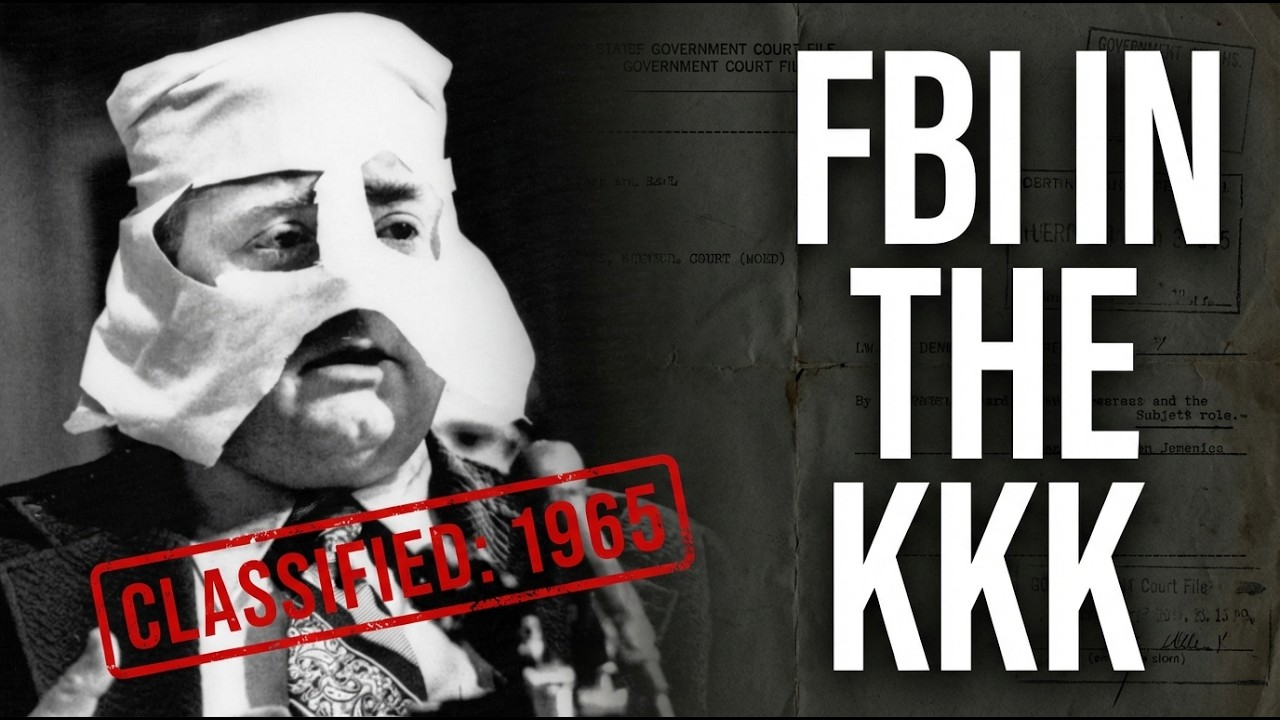
Gary Thomas Rowe was recruited by the FBI in 1960 to infiltrate the Ku Klux Klan in Birmingham, Alabama. His handler, Special Agent Barrett Kemp, gave him a directive that would define one of the most disturbing chapters in American law enforcement history: get inside the Klan, report on their activities, and maintain your cover at all costs. What followed was over a decade of violence committed by a federal informant while the Bureau that employed him either looked away or actively suppressed evidence of his crimes.
Rowe was present on May 14, 1961, when a mob of Klansmen attacked Freedom Riders at the Birmingham Trailways bus station. He had provided the FBI with advance warning that the attack was planned. The Bureau did not intervene. Rowe participated in the beating of the riders, and photographs from that day show him in the crowd. The FBI's response was not to pull their informant or report the crime — it was to ensure his cover remained intact.
The most devastating allegation against Rowe involves the 16th Street Baptist Church bombing on September 15, 1963, which killed four young girls: Addie Mae Collins, Cynthia Wesley, Carole Robertson, and Carol Denise McNair. Multiple witnesses and later investigations placed Rowe in proximity to the bombing conspiracy. While the full extent of his involvement remains disputed, what is documented is that the FBI had intelligence suggesting an attack was being planned and failed to prevent it. Rowe's FBI handlers prioritized maintaining their intelligence asset over protecting Black lives.
In 1965, Rowe was in the car when Klansmen shot and killed Viola Liuzzo, a white civil rights volunteer from Detroit who had traveled to Alabama after the Selma to Montgomery marches. Rowe claimed he was a passive witness. Ballistics evidence and testimony from other Klansmen in the vehicle complicated that account. The FBI's immediate response was not to investigate their informant's role in a murder — it was to launch a smear campaign against Liuzzo, spreading false claims about her personal life to discredit her and deflect attention from the Bureau's complicity.
Rowe eventually testified against fellow Klansmen in the Liuzzo murder trial, and the FBI relocated him under a new identity. He lived under federal protection until his death in 1998. The full scope of violence he committed or facilitated while on the FBI's payroll has never been officially acknowledged. Congressional investigations in the 1970s revealed fragments, but the Bureau's own files on Rowe remain partially classified. What has been declassified shows an agency that treated the lives of Black Americans and civil rights workers as acceptable collateral damage in the pursuit of intelligence.
The Surveillance State
The FBI’s interest was not coincidental. Under J. Edgar Hoover’s directorship, the Bureau maintained extensive surveillance programs targeting Black leaders, organizations, and cultural figures who challenged the racial status quo. COINTELPRO — the Counter Intelligence Program — was the formal structure, but the surveillance extended well beyond any single program. Field offices across the country maintained files, cultivated informants, and deployed agents to monitor, disrupt, and discredit individuals the Bureau deemed threatening to domestic order.
The methods were systematic: wiretaps, mail interception, infiltration of organizations, anonymous letters designed to destroy relationships and reputations, and coordination with local law enforcement to harass targets through arrests, tax audits, and public smear campaigns. The goal was not simply intelligence gathering — it was neutralization. The Bureau sought to prevent the rise of what internal memos described as a “Black messiah” who could unify and electrify the masses.
The Broader Struggle
This story did not unfold in isolation. It was part of a vast, interconnected struggle for equality that defined twentieth-century America. From the courtrooms to the streets, from the churches to the legislative chambers, Black Americans and their allies were challenging a system of racial oppression that had been embedded in law, custom, and daily life for centuries. Each individual story — each act of courage, each confrontation with power — was a thread in a larger tapestry of resistance.
What distinguished this era was the systematic nature of both the oppression and the resistance. The movement operated on multiple fronts simultaneously: legal challenges through organizations like the NAACP Legal Defense Fund, economic pressure through boycotts and selective buying campaigns, moral persuasion through nonviolent direct action, and cultural transformation through art, music, and literature that reframed the narrative of Black life in America.
Justice Deferred
The legal dimensions of this case reveal how the American justice system has historically functioned as both a tool of liberation and a mechanism of oppression. Courts that were capable of landmark civil rights decisions were equally capable of producing outcomes that reinforced racial hierarchies. The same Constitution that guaranteed equal protection under the law was interpreted, for generations, to permit systematic racial discrimination.
What the legal record shows is that justice, when it came at all, came slowly and incompletely. Cases dragged on for years. Evidence was suppressed, witnesses were intimidated, and juries were selected from pools that excluded Black citizens. The system worked exactly as it was designed to work — not to deliver impartial justice, but to maintain the existing social order. When that order was finally challenged, the system resisted with every tool at its disposal.
Why This Matters Now
This history is not merely an account of past events. It is a living document that shapes the present. The institutions that enabled these abuses — the FBI, local police departments, the courts — continue to operate today. The patterns of surveillance, suppression, and selective justice that defined the treatment of Black Americans in the twentieth century did not end with the passage of civil rights legislation. They evolved, adapted, and persisted in forms that are sometimes more subtle but no less consequential.
Understanding this history is essential not as an exercise in guilt or recrimination, but as a foundation for honest engagement with the ongoing challenges of racial justice in America. The stories of individuals who faced overwhelming institutional power and refused to surrender — who insisted on their dignity, their rights, and their humanity in the face of systematic attempts to deny all three — remain relevant because the struggle they waged is not over.
Leave a Reply