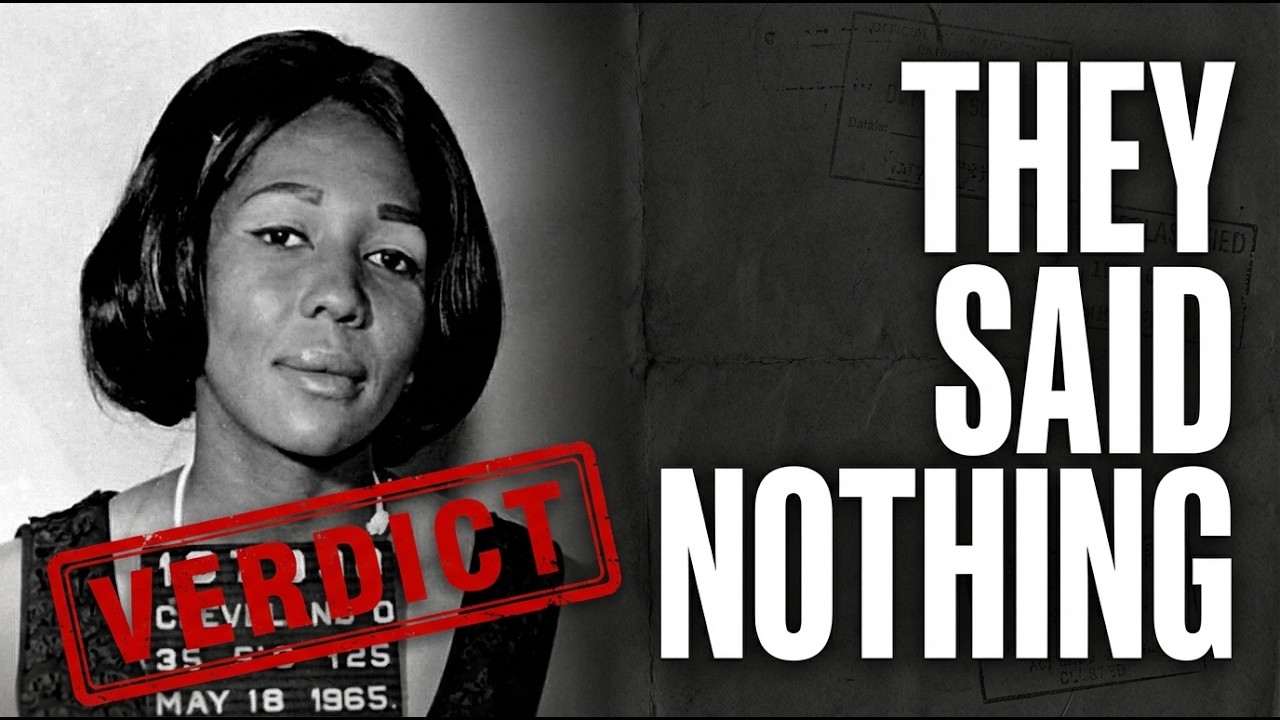
Doris Payne Exposed America's Dirty Secret About Race and Luxury
Doris Payne was born in 1930 in Slab Fork, West Virginia, to a coal miner and a domestic worker. By the time she was in her eighties, she had stolen an estimated $2 million in jewelry from high-end stores across the United States and Europe, operating for over six decades with a method so simple it revealed something fundamental about how American society processes race, gender, and wealth.
Her technique never involved force, weapons, or accomplices. She would enter luxury jewelry stores — Cartier, Tiffany, Neiman Marcus — dressed impeccably, carrying herself with the quiet confidence of someone who belonged. She would engage salespeople in conversation, ask to see multiple pieces, try rings on different fingers, and through a combination of charm, misdirection, and the simple act of slipping a piece into her pocket while the clerk's attention was divided, walk out with diamonds worth tens of thousands of dollars.
What made Payne's career possible was the intersection of two American blind spots. First, luxury retail in the mid-20th century operated on assumptions about who could afford their merchandise. A well-dressed, articulate Black woman asking to see expensive diamonds created a cognitive dissonance that Payne exploited — store employees were so focused on the unexpected nature of her presence that their standard security awareness degraded. Second, the stores she targeted were reluctant to publicly acknowledge they had been robbed by a Black woman, because doing so would require admitting that their own racial assumptions had been used against them.
Payne was arrested multiple times across multiple states and countries, but she served relatively short sentences and resumed operations upon release. Her story became the subject of a 2013 documentary, and she continued shoplifting into her late eighties. Her last known arrest came in 2017, at age 86, at a Walmart — a detail that underscored how far her circumstances had fallen from the luxury stores where she once operated.
The Doris Payne story is not simply a crime narrative. It is a mirror held up to the architecture of American luxury retail, which was built on racial exclusion and maintained through assumptions about who deserves access to wealth. Payne did not create those assumptions. She simply walked through the doors they left open.
Art as Resistance
Music was never just entertainment in this context — it was a weapon, a shield, and a declaration. Black artists who used their platform to address racial injustice understood that their art reached audiences that political speeches could not. A song could cross racial lines, enter homes through radio waves, and plant ideas in minds that might otherwise remain closed. The government understood this too, which is precisely why artists who spoke out became targets.
The relationship between Black music and political power has always been fraught. Record labels, concert promoters, and radio stations — overwhelmingly white-owned — controlled distribution and access. Artists who pushed too far politically risked losing airplay, bookings, and contracts. The choice between commercial success and authentic expression was rarely simple, and those who chose to speak truth through their art often paid a steep professional and personal price.
Justice Deferred
The legal dimensions of this case reveal how the American justice system has historically functioned as both a tool of liberation and a mechanism of oppression. Courts that were capable of landmark civil rights decisions were equally capable of producing outcomes that reinforced racial hierarchies. The same Constitution that guaranteed equal protection under the law was interpreted, for generations, to permit systematic racial discrimination.
What the legal record shows is that justice, when it came at all, came slowly and incompletely. Cases dragged on for years. Evidence was suppressed, witnesses were intimidated, and juries were selected from pools that excluded Black citizens. The system worked exactly as it was designed to work — not to deliver impartial justice, but to maintain the existing social order. When that order was finally challenged, the system resisted with every tool at its disposal.
America’s Pattern of Exile
The forced departure of Black leaders, artists, and intellectuals from the United States represents one of the country’s most damaging patterns of self-inflicted cultural and intellectual loss. Throughout the twentieth century, America systematically drove away some of its most brilliant citizens — not through formal banishment, but through a campaign of harassment, economic pressure, and legal persecution that made remaining in the country untenable.
The list of Black Americans who lived in exile — voluntarily or otherwise — reads like a catalog of American genius. Writers, musicians, scientists, and activists found in Paris, London, Accra, and Havana the freedom to live and work without the constant threat of racial violence and government surveillance. Their departure impoverished American culture while enriching the nations that received them.
Why This Matters Now
This history is not merely an account of past events. It is a living document that shapes the present. The institutions that enabled these abuses — the FBI, local police departments, the courts — continue to operate today. The patterns of surveillance, suppression, and selective justice that defined the treatment of Black Americans in the twentieth century did not end with the passage of civil rights legislation. They evolved, adapted, and persisted in forms that are sometimes more subtle but no less consequential.
Understanding this history is essential not as an exercise in guilt or recrimination, but as a foundation for honest engagement with the ongoing challenges of racial justice in America. The stories of individuals who faced overwhelming institutional power and refused to surrender — who insisted on their dignity, their rights, and their humanity in the face of systematic attempts to deny all three — remain relevant because the struggle they waged is not over.
Leave a Reply