How Fannie Lou Hamer Built A Movement
Fannie Lou Townsend Hamer was born on October 6, 1917, in Montgomery County, Mississippi, the youngest of twenty children born to sharecroppers James Lee and Ella Townsend. She began picking cotton at age six. By her early twenties, she had spent nearly her entire life in the Mississippi Delta—one of the poorest regions in America, where Black sharecroppers lived in conditions that barely distinguished them from slavery. This was the world that created her, and it would be the world she refused to accept as permanent.
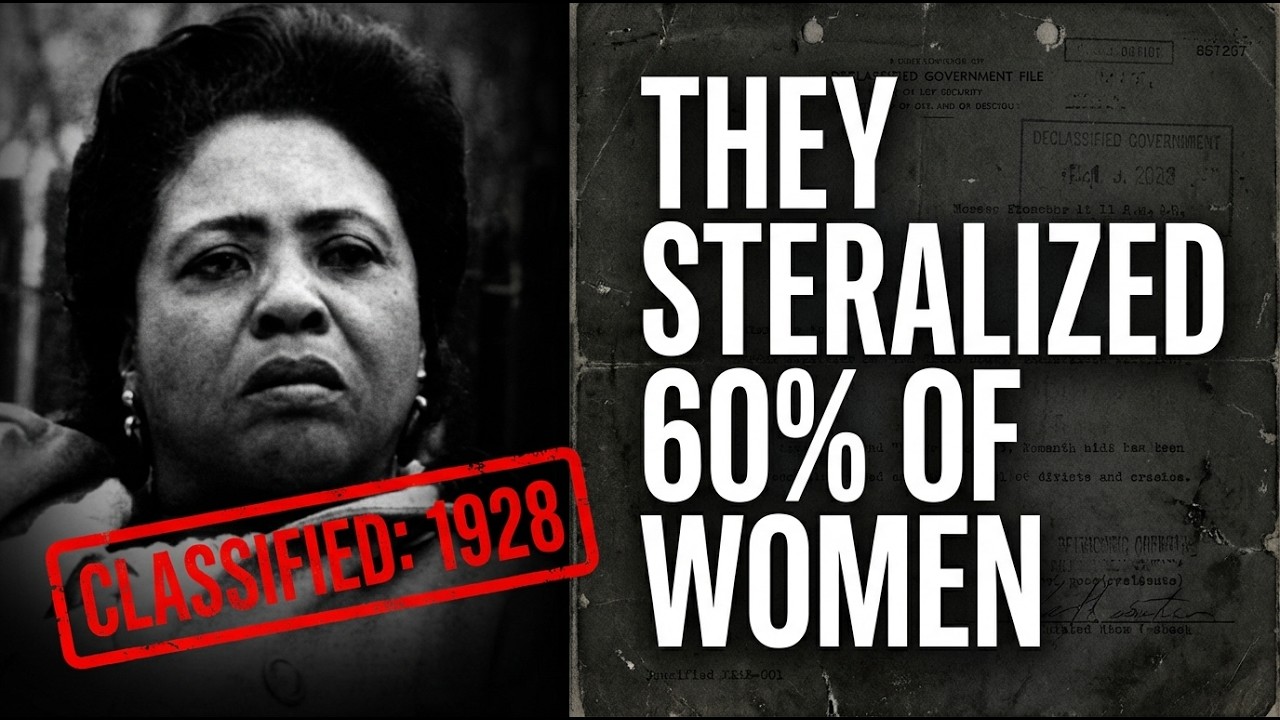
In 1961, at age 44, Hamer entered North Sunflower County Hospital for a routine tumor removal. She woke from surgery sterilized—her uterus removed without her knowledge or consent. The surgeon who performed this violation never asked permission, never informed her of what he had done, never offered explanation. This procedure had a name across the South: the Mississippi Appendectomy. In Sunflower County alone, 60% of Black women who underwent any hospital procedure were sterilized. Mississippi had passed a compulsory sterilization law in 1928 under Governor Theodore Bilbo, giving the state legal sanction to erase the reproductive futures of Black women. Hamer was one of thousands—a statistic in a campaign of demographic destruction so normalized that it required no individual justification.
This violation could have ended Hamer. It was designed to end her—to erase her, render her incomplete, mark her as less than human. Instead, it activated her. In 1962, she became involved with the Student Nonviolent Coordinating Committee's voter registration efforts. She went door-to-door throughout Sunflower County, not just registering voters but documenting something else: which women had been sterilized, which families had been destroyed, which bodies had been violated by the state. She transformed her own devastation into evidence, her own wound into documentation.
Hamer testified at the 1964 Democratic National Convention about the violence her family had endured for attempting to register as voters. Her statement—raw, unflinching, delivered to a national television audience—exposed the machinery of Southern terror that the Democratic Party had buried beneath rhetoric about state rights and local control. The convention refused to seat the Mississippi Freedom Democratic Party delegation. The system Hamer appealed to rejected her. So she built something else.
Freedom Farm Cooperative was established in 1969 in Sunflower County. It was simple and radical: Black families would own land collectively, grow their own food, and sell surplus to build community wealth. At its height, Freedom Farm controlled 680 acres and provided economic independence to families who had never known anything but dependence on white landowners. Hamer was building the material infrastructure of liberation—the ability for her community to feed themselves, clothe themselves, survive without permission from the system that had tried to sterilize them into oblivion.
Fannie Lou Hamer died on March 14, 1977, at age 59. She had no biological children of her own—the state had decided that for her. Yet she mothered a movement. Freedom Farm outlasted her by decades. Her testimony shaped voting rights legislation. Her voice, captured on film, became the conscience of the Civil Rights Movement. The woman they tried to erase became unforgettable.
The Broader Struggle
This story did not unfold in isolation. It was part of a vast, interconnected struggle for equality that defined twentieth-century America. From the courtrooms to the streets, from the churches to the legislative chambers, Black Americans and their allies were challenging a system of racial oppression that had been embedded in law, custom, and daily life for centuries. Each individual story — each act of courage, each confrontation with power — was a thread in a larger tapestry of resistance.
What distinguished this era was the systematic nature of both the oppression and the resistance. The movement operated on multiple fronts simultaneously: legal challenges through organizations like the NAACP Legal Defense Fund, economic pressure through boycotts and selective buying campaigns, moral persuasion through nonviolent direct action, and cultural transformation through art, music, and literature that reframed the narrative of Black life in America.
The Price of Resistance
The violence that punctuated the struggle for Black equality was not random. It was strategic, designed to terrorize communities into submission and to send a message to anyone who might consider challenging the racial order. Every killing, every beating, every act of destruction served a purpose within a system that depended on Black acquiescence for its survival.
What the perpetrators consistently underestimated was the resilience of the communities they targeted. Violence did not silence the movement — it amplified it. Each act of brutality created new activists, new allies, and new urgency. The photographs, the testimonies, and the names of the fallen became rallying points that sustained the struggle across generations.
Why This Matters Now
This history is not merely an account of past events. It is a living document that shapes the present. The institutions that enabled these abuses — the FBI, local police departments, the courts — continue to operate today. The patterns of surveillance, suppression, and selective justice that defined the treatment of Black Americans in the twentieth century did not end with the passage of civil rights legislation. They evolved, adapted, and persisted in forms that are sometimes more subtle but no less consequential.
Understanding this history is essential not as an exercise in guilt or recrimination, but as a foundation for honest engagement with the ongoing challenges of racial justice in America. The stories of individuals who faced overwhelming institutional power and refused to surrender — who insisted on their dignity, their rights, and their humanity in the face of systematic attempts to deny all three — remain relevant because the struggle they waged is not over.
Leave a Reply