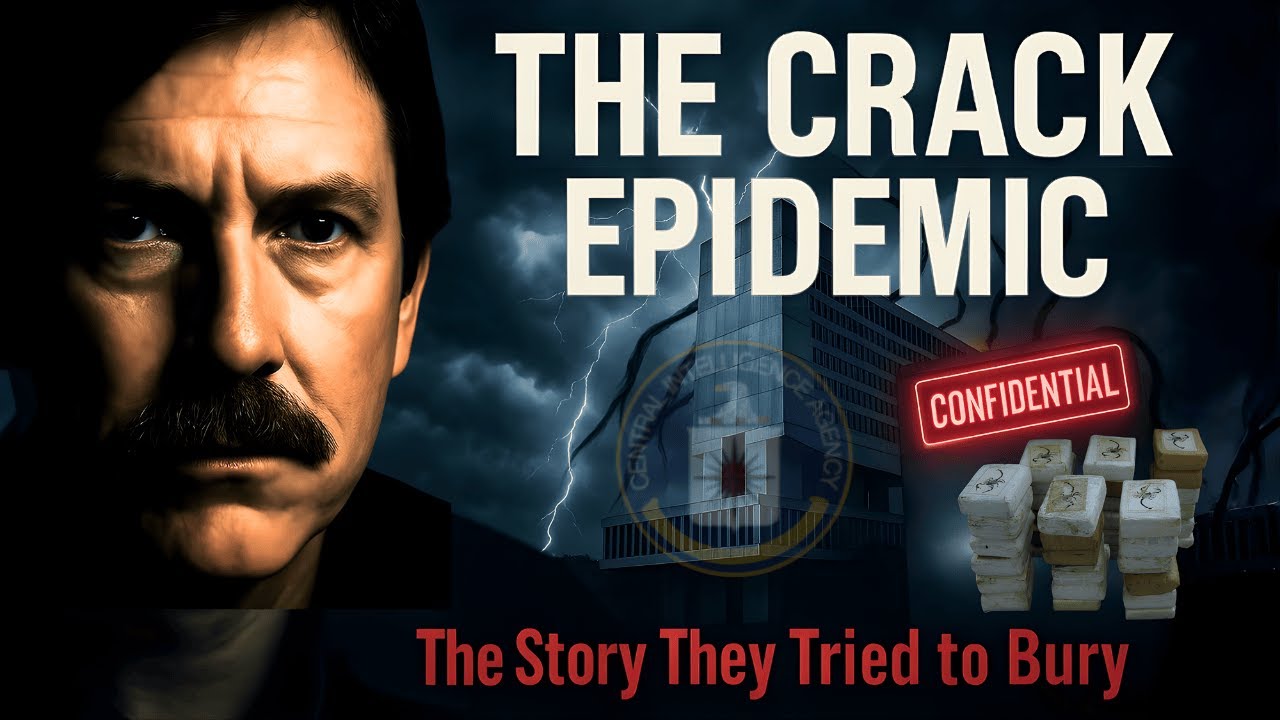
Gary Webb Exposed the CIA-Crack Pipeline. They Destroyed His Career, Then He Died.
On August 18, 1996, Gary Webb, an investigative reporter for the San Jose Mercury News, published the first installment of "Dark Alliance," a three-part series that traced the crack cocaine epidemic in Los Angeles directly to the Nicaraguan Contras — a CIA-funded guerrilla army fighting the Sandinista government.
Webb documented that Danilo Blandon and Norwin Meneses, two Nicaraguan nationals with direct ties to the Contra leadership, had funneled tons of cocaine to "Freeway" Ricky Ross, the most prolific crack dealer in South Central Los Angeles. The profits flowed back to the Contras. The CIA knew.
The series was explosive. It was also, in its core findings, accurate.
Within weeks, the Los Angeles Times, the Washington Post, and the New York Times published coordinated attacks on Webb's reporting. They did not dispute the Blandon-Meneses-Ross pipeline. They attacked Webb's implication that the CIA had intentionally facilitated the crack epidemic. The distinction was narrow but effective: Webb had documented the supply chain; his critics argued he had overstated the agency's intent.
The Mercury News buckled. Executive editor Jerry Ceppos published a column in May 1997 acknowledging \u201cshortcomings\u201d in the series. He did not retract the factual claims. But the damage was done. Webb was reassigned to a bureau 150 miles from the newsroom. He resigned in December 1997.
Then the CIA\u2019s own inspector general proved him right.
In January 1998, CIA Inspector General Frederick Hitz released Volume I of his investigation into the Contra-cocaine allegations. Volume II followed in October 1998. The reports confirmed that the CIA had maintained relationships with Contra-linked drug traffickers; that the agency had received reports of Contra drug activity and failed to investigate; and that a 1982 Memorandum of Understanding between the CIA and the Department of Justice had explicitly exempted the CIA from reporting drug crimes by its assets.
The 1982 memorandum is the key document. It was signed by CIA Director William Casey and Attorney General William French Smith. It stated that CIA officers and agents were not required to report drug trafficking by non-employees — meaning the Contra operatives moving cocaine through Los Angeles were protected by policy, not just negligence.
Webb documented the pipeline. The CIA\u2019s own inspector general confirmed the institutional framework that allowed it to operate. The major newspapers that attacked Webb never published corrections acknowledging the inspector general's findings.
Gary Webb was found dead on December 10, 2004, from two gunshot wounds to the head. The Sacramento County coroner ruled it a suicide. He was forty-nine years old.
The "Dark Alliance" series ran on the Mercury News website — one of the first major investigative pieces published online. It received 1.3 million hits in its first month, an unprecedented number in 1996. The story reached the audience the newspapers could not contain. And the CIA\u2019s own files confirmed what Webb reported: the agency knew about the cocaine, knew where it was going, and had a signed agreement ensuring no one was required to stop it.
The Surveillance State
The FBI’s interest was not coincidental. Under J. Edgar Hoover’s directorship, the Bureau maintained extensive surveillance programs targeting Black leaders, organizations, and cultural figures who challenged the racial status quo. COINTELPRO — the Counter Intelligence Program — was the formal structure, but the surveillance extended well beyond any single program. Field offices across the country maintained files, cultivated informants, and deployed agents to monitor, disrupt, and discredit individuals the Bureau deemed threatening to domestic order.
The methods were systematic: wiretaps, mail interception, infiltration of organizations, anonymous letters designed to destroy relationships and reputations, and coordination with local law enforcement to harass targets through arrests, tax audits, and public smear campaigns. The goal was not simply intelligence gathering — it was neutralization. The Bureau sought to prevent the rise of what internal memos described as a “Black messiah” who could unify and electrify the masses.
Why This Matters Now
This history is not merely an account of past events. It is a living document that shapes the present. The institutions that enabled these abuses — the FBI, local police departments, the courts — continue to operate today. The patterns of surveillance, suppression, and selective justice that defined the treatment of Black Americans in the twentieth century did not end with the passage of civil rights legislation. They evolved, adapted, and persisted in forms that are sometimes more subtle but no less consequential.
Understanding this history is essential not as an exercise in guilt or recrimination, but as a foundation for honest engagement with the ongoing challenges of racial justice in America. The stories of individuals who faced overwhelming institutional power and refused to surrender — who insisted on their dignity, their rights, and their humanity in the face of systematic attempts to deny all three — remain relevant because the struggle they waged is not over.
The Investigation That Wouldn’t Die
Webb’s reporting was based on extensive documentation — court records, DEA reports, congressional testimony, and interviews with participants in the drug trade. He traced a supply chain from Nicaraguan Contra operatives through Los Angeles-based drug dealers to the crack epidemic that devastated Black communities in the 1980s. The CIA’s role was not direct drug trafficking but something potentially worse: deliberate ignorance of — and in some cases active protection of — drug operations conducted by anti-communist allies the agency had chosen to support.
The response to Webb’s reporting followed a pattern that journalism scholars have since documented as institutional backlash. Rather than investigating his claims, major newspapers — the Los Angeles Times, the Washington Post, and the New York Times — investigated Webb himself. They did not disprove his central thesis; they attacked his methodology, his sourcing, and his conclusions while ignoring the documentary evidence he had assembled. Webb’s own newspaper, the San Jose Mercury News, eventually retracted its support for the series under pressure.
Leave a Reply