Her Case Ended Bus Segregation. They Sealed Her Record for 66 Years.
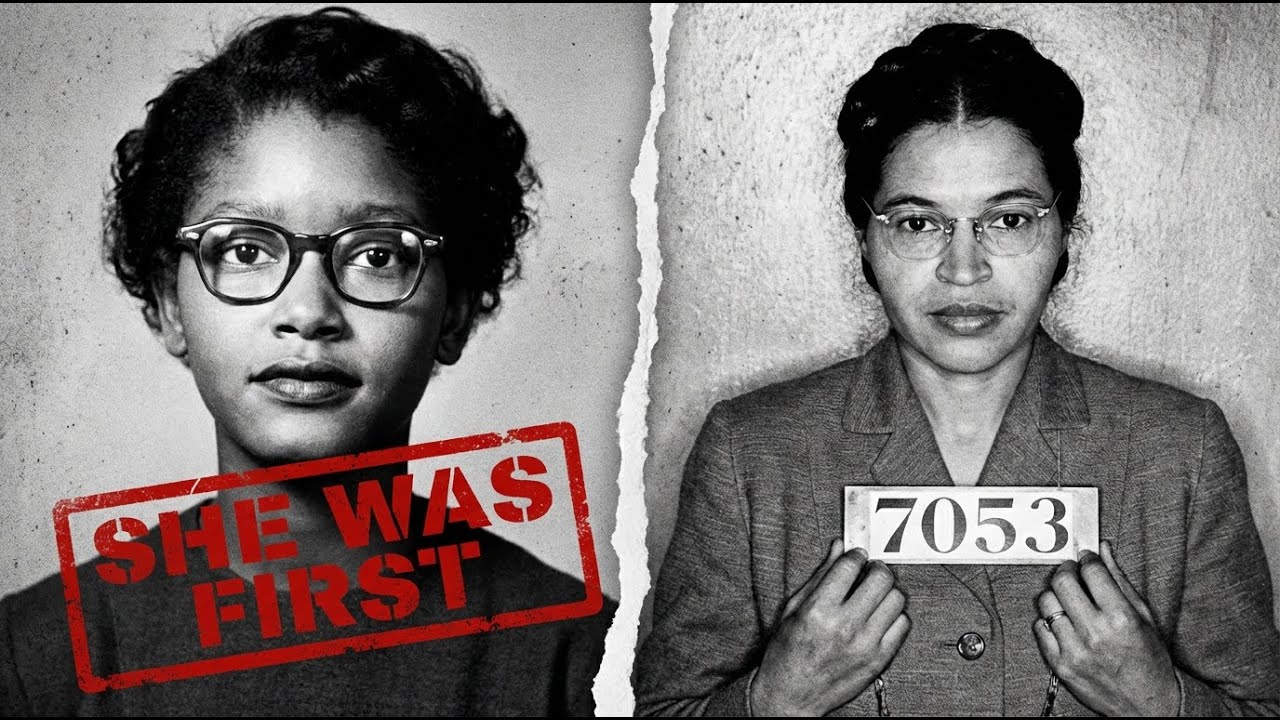
On March 2, 1955 — nine months before Rosa Parks refused to give up her seat — a fifteen-year-old girl named Claudette Colvin did the exact same thing on a Montgomery, Alabama city bus. She was dragged off by two police officers, arrested, and charged with assault, disorderly conduct, and violating the city's segregation ordinance.
Colvin became one of four plaintiffs in Browder v. Gayle, the federal lawsuit that actually ended bus segregation in Montgomery. Not the boycott. The lawsuit. And Colvin was Plaintiff Number One.
But the NAACP and the Montgomery Improvement Association made a calculated decision: Claudette Colvin would not be the face of the movement. Rosa Parks would.
The reasoning was documented in internal NAACP communications. Colvin was fifteen, unmarried, and pregnant. She was dark-skinned. She came from the working-class King Hill neighborhood. The movement's leadership — including E.D. Nixon and attorney Fred Gray — determined that Colvin did not fit the image they needed to present to white America. Parks was older, lighter-skinned, married, and had completed the NAACP's own training program at the Highlander Folk School.
This was not a conspiracy. It was strategy. And it worked. But the cost was borne entirely by a fifteen-year-old girl.
Colvin's juvenile arrest record was sealed by the state of Alabama. It remained sealed for sixty-six years. During that time, the record followed her — preventing employment, creating background check complications, and functioning as an invisible weight on her life. She moved to New York City in 1958, where she worked as a nurse's aide for thirty-five years.
Fred Gray, the attorney who represented both Colvin and Parks, has acknowledged this dynamic in interviews. He chose Colvin as the lead plaintiff in Browder v. Gayle because her case was legally stronger — she was a minor who had been subjected to excessive force. But the public campaign was built around Parks because the movement needed a symbol that white moderates would find sympathetic.
The Supreme Court affirmed the lower court's ruling in Browder v. Gayle on November 13, 1956. Bus segregation in Montgomery was unconstitutional. The boycott ended the following month. Rosa Parks became an icon. Claudette Colvin took a Greyhound bus to New York.
In December 2021, sixty-six years after her arrest, a juvenile court judge in Montgomery expunged Colvin's record. She was eighty-two years old. At the hearing, she said: "I feel like a full citizen now."
Claudette Colvin did not refuse to move because she had been trained. She refused because, as she testified, she felt the hands of Harriet Tubman and Sojourner Truth pushing her back down into her seat. She was fifteen. She was brave. And she was strategically inconvenient.
Her record is expunged now. Her name is in the history books — finally. But for sixty-six years, the system sealed the evidence of what she did, and the movement she served chose someone else to remember.
The Surveillance State
The FBI’s interest was not coincidental. Under J. Edgar Hoover’s directorship, the Bureau maintained extensive surveillance programs targeting Black leaders, organizations, and cultural figures who challenged the racial status quo. COINTELPRO — the Counter Intelligence Program — was the formal structure, but the surveillance extended well beyond any single program. Field offices across the country maintained files, cultivated informants, and deployed agents to monitor, disrupt, and discredit individuals the Bureau deemed threatening to domestic order.
The methods were systematic: wiretaps, mail interception, infiltration of organizations, anonymous letters designed to destroy relationships and reputations, and coordination with local law enforcement to harass targets through arrests, tax audits, and public smear campaigns. The goal was not simply intelligence gathering — it was neutralization. The Bureau sought to prevent the rise of what internal memos described as a “Black messiah” who could unify and electrify the masses.
The Broader Struggle
This story did not unfold in isolation. It was part of a vast, interconnected struggle for equality that defined twentieth-century America. From the courtrooms to the streets, from the churches to the legislative chambers, Black Americans and their allies were challenging a system of racial oppression that had been embedded in law, custom, and daily life for centuries. Each individual story — each act of courage, each confrontation with power — was a thread in a larger tapestry of resistance.
What distinguished this era was the systematic nature of both the oppression and the resistance. The movement operated on multiple fronts simultaneously: legal challenges through organizations like the NAACP Legal Defense Fund, economic pressure through boycotts and selective buying campaigns, moral persuasion through nonviolent direct action, and cultural transformation through art, music, and literature that reframed the narrative of Black life in America.
Art as Resistance
Music was never just entertainment in this context — it was a weapon, a shield, and a declaration. Black artists who used their platform to address racial injustice understood that their art reached audiences that political speeches could not. A song could cross racial lines, enter homes through radio waves, and plant ideas in minds that might otherwise remain closed. The government understood this too, which is precisely why artists who spoke out became targets.
The relationship between Black music and political power has always been fraught. Record labels, concert promoters, and radio stations — overwhelmingly white-owned — controlled distribution and access. Artists who pushed too far politically risked losing airplay, bookings, and contracts. The choice between commercial success and authentic expression was rarely simple, and those who chose to speak truth through their art often paid a steep professional and personal price.
Justice Deferred
The legal dimensions of this case reveal how the American justice system has historically functioned as both a tool of liberation and a mechanism of oppression. Courts that were capable of landmark civil rights decisions were equally capable of producing outcomes that reinforced racial hierarchies. The same Constitution that guaranteed equal protection under the law was interpreted, for generations, to permit systematic racial discrimination.
What the legal record shows is that justice, when it came at all, came slowly and incompletely. Cases dragged on for years. Evidence was suppressed, witnesses were intimidated, and juries were selected from pools that excluded Black citizens. The system worked exactly as it was designed to work — not to deliver impartial justice, but to maintain the existing social order. When that order was finally challenged, the system resisted with every tool at its disposal.
Why This Matters Now
This history is not merely an account of past events. It is a living document that shapes the present. The institutions that enabled these abuses — the FBI, local police departments, the courts — continue to operate today. The patterns of surveillance, suppression, and selective justice that defined the treatment of Black Americans in the twentieth century did not end with the passage of civil rights legislation. They evolved, adapted, and persisted in forms that are sometimes more subtle but no less consequential.
Understanding this history is essential not as an exercise in guilt or recrimination, but as a foundation for honest engagement with the ongoing challenges of racial justice in America. The stories of individuals who faced overwhelming institutional power and refused to surrender — who insisted on their dignity, their rights, and their humanity in the face of systematic attempts to deny all three — remain relevant because the struggle they waged is not over.
Leave a Reply